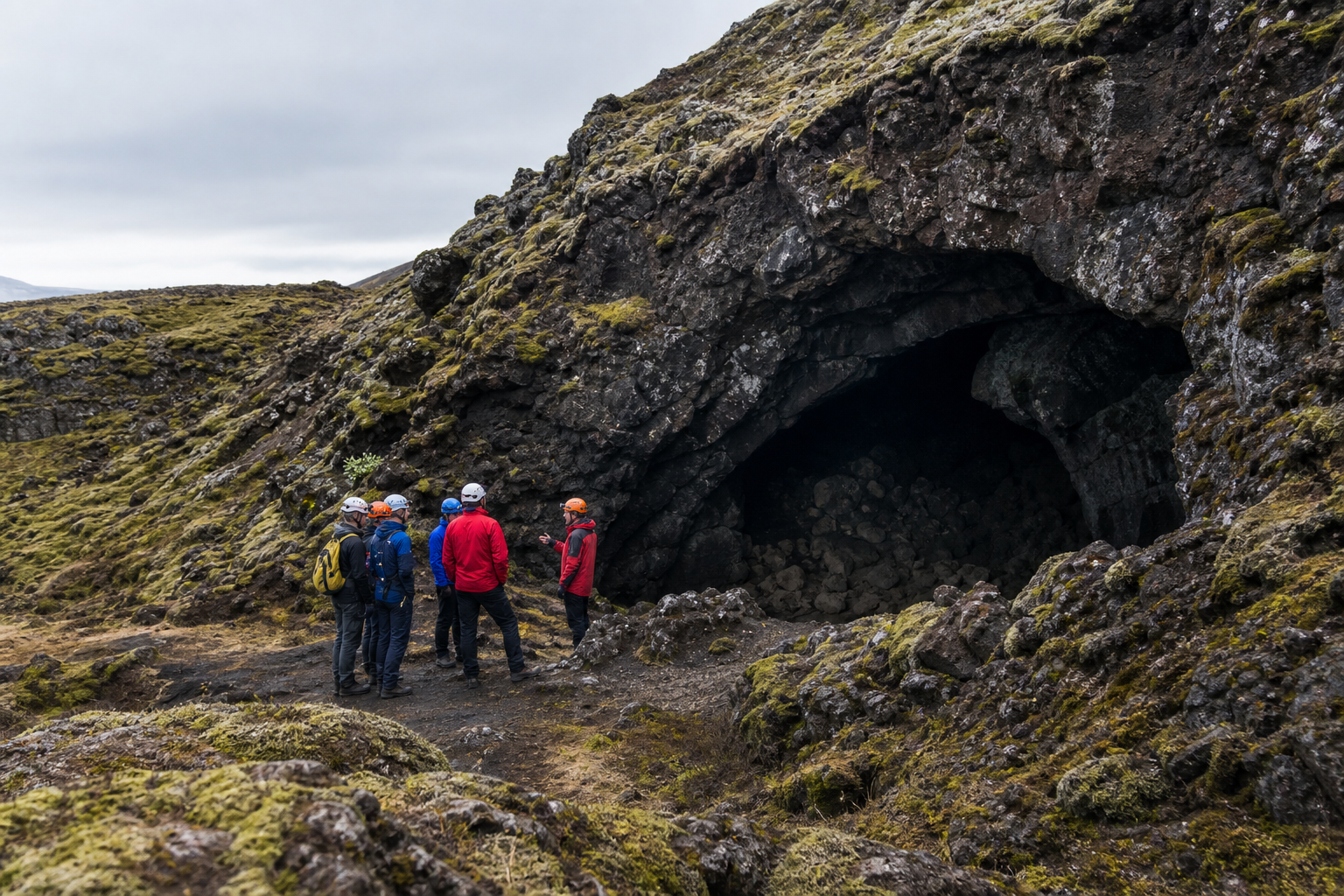
Entering a cave can be life-threatening. Plan entry only with a qualified local guide or managed operator who has assessed the current cave and approach. Without that, stay outside.
A cave name does not identify today's route
Ice-cave passages can change, while lava tubes and sea caves have different hazards. Do not transfer an old trip report, equipment list or map line to another cave. A helmet and light do not establish stability, permission or a safe exit.
Compare managed visits before booking
Ask for the specific experience, current approach, walking and mobility requirements, provided equipment, group restrictions and cancellation criteria. Establish whether the planned visit remains suitable for the least mobile participant. The responsible operator, not a generic cave directory, must resolve these details.
Read current SafeTravel advice and the land manager's rules. An empty or incomplete DULIN cave listing is not evidence that a cave is open or suitable.
Examples of cave visits that require different planning
Questions to ask a cave operator
- Is the operator qualified for this cave and current season?
- What footwear, helmet, lighting, crampons or other equipment is provided?
- What fitness, age or mobility requirements apply?
- What weather, glacier or access conditions would cancel the trip?
- Does the operator have permission for the protected area or land?
Quick answers
Are lava caves safer than ice caves?
They have different hazards, not an automatic lower risk. Lava tubes can contain unstable rock, holes, darkness and confusing passages; ice caves add moving ice, collapse, crevasses and seasonal change. Use a qualified guide for entry.
Can an old GPS track prove that a cave is open?
No. A track proves only that someone recorded a route at another time. It does not establish present stability, permission, tide, glacier conditions or safe equipment.
Visit Iceland recommends an experienced guide. For glacier caves, also check the current national-park, SafeTravel and operator information before departure.
Open the map when you need to compare nearby places, hikes, road access, weather context and saved trip items.