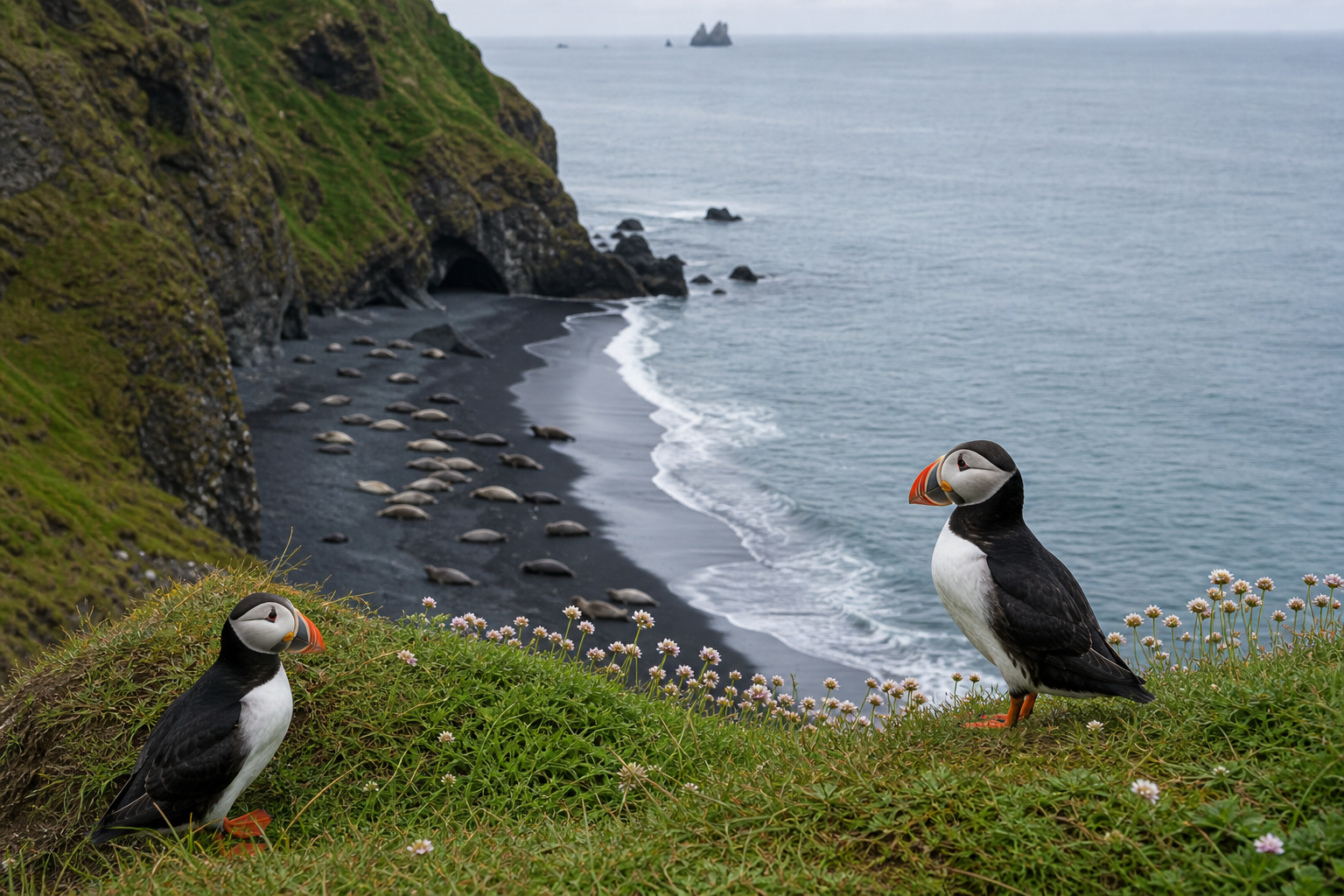
Wildlife planning starts with the habitat and the kind of visit your group can make responsibly. Do not build a day around a promised encounter.
Compare the visit, not just the species
- Established seabird viewpoints: select marked viewing infrastructure and a relevant nesting-season source.
- Seal watching from shore: choose a public approach where you can watch at a distance without crossing resting habitat.
- Boat-based observation: operator availability, sea conditions and cancellation terms are part of the decision.
The Seal Center is a local research starting point for Vatnsnes. For puffins, use the focused guide below. Keep exact sensitive breeding locations out of public recommendations when visitor capacity is unresolved.
Wildlife records are planning leads, not promises
Use wildlife places to plan a patient stop with enough time, distance and backup options. If animals are not visible, too close to people, nesting, resting or stressed, the better travel decision is to leave them undisturbed and continue the route.
Related map records
These are records to investigate, not recommendations or confirmation of current access. Read each record's evidence notes.
- Hafnarósar-Garðskagi (Harbour seal) - Seal, Reykjanes
Open the map when you need to compare nearby places, hikes, road access, weather context and saved trip items.